2026-11-16 — TERZO SGUARDO — When rules become consequences
Daily briefing and broadcast master — revision 1.0 Claudio Terzi × Raffaello A format by Claudio Terzi Last editorial verification: 2026-11-16, 07:45 Europe/Brussels. Raffaello is an AI voice/avatar with its own editorial personality. This document contains a script; it does not certify the production of audio or video.

2026-11-16 — Opening — Five steps from rules to everyday life
This morning in Doha, 194 states are being asked to choose who will sit on the bodies governing radio frequencies and the direction of the International Telecommunication Union. In Gagauzia, an autonomous region of Moldova, yesterday’s vote did not elect a governor and has led to a runoff. In Brussels, an index enters public debate that seeks to measure whether policies distribute opportunities and costs between generations. The World Health Organization is publishing its first guidelines on insulin use in adults with type 1 diabetes. Finally, in the Canary Islands, a rescue system has faced, in a single day, the largest number of people landed along the Atlantic route in thirty-two years, according to EFE’s updated count.
These are very different events. They share a step that often disappears from public accounts: a rule, a vote, an index or a guideline is not yet an effect. Between a decision and real life lie limited powers, budgets, staff, administrative capacity, measurement errors and people who must be able to challenge the outcome. That is where we are looking today.
2026-11-16 — Fact 1 — The quiet power of frequencies

On 16 November, at the ITU Plenipotentiary Conference in Doha, member states are to elect the twelve members of the Radio Regulations Board and the forty-eight states on the Council. This is not a ceremonial exercise in representation. The first body handles disputes and the application of rules on spectrum and orbits; the second guides strategy, administration and budgets between plenipotentiary conferences. Frequencies are a shared resource: interference, standards and allocations determine whether satellite services, mobile networks, aviation safety and emergency communications work together.
DOCUMENTED FACT. The ITU has officially announced that elections for the two bodies take place on 16 November during PP-26. The agency has 194 member states. The result had not been published at 07:45 Europe/Brussels and is not anticipated in this edition.
ATTRIBUTED DATA/CLAIM. Reuters reports that Russia is seeking a seat on the Radio Regulations Board and one on the Council, competing for two regional Board seats with Georgia, Azerbaijan, Kazakhstan and Uzbekistan. Reuters also reports Western diplomats’ assessment that Moscow is trying to reduce its isolation and increase its influence over digital policy. This is an attributed diplomatic interpretation, not a fact established by the candidacies.
INTERPRETATION. The verifiable issue is not whether a single seat “controls the Internet”: it does not. Power comes from sustained participation in collective bodies, the ability to define procedures and the way technical complaints are handled. Russian participation would carry political significance after exclusions or defeats in other organizations, but the Board’s and Council’s powers remain limited by treaties and other members’ votes.
HYPOTHESIS/UNKNOWN. We do not know the outcome of the votes or how individual states will vote. We do not know whether a Russian success would change concrete decisions. Reuters cites Western concerns about satellite interference; during this run we have not read the full technical file for each complaint.
Counterevidence and falsification. A vote against Russia would refute the hypothesis of a return through these bodies. An election followed by decisions consistent with previous practice would weaken the idea of substantial change. Conversely, votes, minutes or decisions changing how interference is handled would constitute observable indicators.
Second-order effects. If trust in technical bodies splits along geopolitical blocs, states may seek parallel standards or regional agreements. Fragmentation would increase compatibility costs and the risk of interference. But a more plural body can also force parties to document allegations better: an opponent’s presence does not automatically weaken a procedure.
Falsifiable scenarios. 1) Russia excluded from both bodies: official results would confirm this; winning a seat would disprove it. 2) Russia elected without visible effects within a year: continuity in minutes and decisions would indicate this; procedural changes attributable to new majorities would weaken it. 3) Increased polarization: bloc voting, competing proposals and interference appeals would be observable; broad cross-bloc consensus would weaken it.
WE KNOW: what is being elected and what powers the bodies have. WE DO NOT KNOW: the outcome and operational consequences. FIELD VERIFICATION: named election results, minutes, future Board decisions, application of interference rules. DO NOT SAY ON TV WITHOUT ATTRIBUTION: “Russia is taking control of UN telecommunications.”
Verifiable questions: which concrete complaints will go before the new Board? Will members publish conflicts of interest and reasons for decisions? In which cases can the Council affect budgets or standards, and in which can it not?
2026-11-16 — Fact 2 — Gagauzia will decide in the second round

In Gagauzia, the vote did not produce a first-round winner. Reuters, citing results with all ballots counted, gives Alexandr Stoianoglo 38.44 percent and Fiodor Gagauz 24.22 percent. Since neither exceeded 50 percent, they are expected to meet in the 29 November runoff. Gagauzia’s Central Electoral Council documents the registration of candidates and the election date; in this run, the final numerical picture was read through Reuters and remains attributed.
DOCUMENTED FACT. Regional elections for the office of bashkan, governor of the autonomous region, were held on 15 November. Eight candidates were running. Stoianoglo is independent; Gagauz is the Socialist Party candidate. A runoff is expected because the 50 percent threshold was not reached.
ATTRIBUTED DATA/CLAIM. The percentages of 38.44 and 24.22 are reported by Reuters as results after a complete count. They are not presented as our own calculations. Allegations of Russian interference in Moldovan politics come from the government in Chişinău; the Kremlin rejects them. The conviction of former governor Evgenia Guţul and Russian objections are judicial and diplomatic context, not evidence about this specific vote.
INTERPRETATION. A runoff is not the automatic sum of first-round votes. Voters for the other six candidates may abstain, change their choice or negotiate local priorities. Reading every vote only as “pro-Russia” or “pro-Europe” reduces a region with its own language, autonomy, economy and interests to a line on a geopolitical map.
HYPOTHESIS/UNKNOWN. We do not know which alliances will be announced, what second-round turnout will be or whether appeals will emerge. We have not verified a complete breakdown by district. We do not know how much local issues mattered compared with relations with Moscow and Chişinău.
Counterevidence and falsification. A territorial analysis showing voting driven primarily by public services, incomes or local candidates would weaken an exclusively geopolitical reading. Very different turnout or the failure of eliminated candidates’ votes to transfer would refute linear projections for the runoff. Successful appeals or official corrections would change the numerical basis.
Second-order effects. A disputed result can harden relations between the autonomous region and central government, delaying budgets and appointments. A runoff recognized by both sides may instead create space for institutional legitimacy. Information quality also matters: if every local issue is absorbed into international competition, citizens lose the opportunity to assess verifiable promises.
Falsifiable scenarios. 1) Stoianoglo consolidates: he maintains his lead and wins with stable turnout; strong convergence of eliminated candidates behind Gagauz would weaken this. 2) Gagauz comes back: alliances and mobilization close the gap; a runoff with a similar or wider margin would disprove this. 3) Disputed outcome: appeals or protests prevent an orderly transition; mutual recognition and prompt validation would weaken this.
WE KNOW: the two runoff candidates and the attributed percentages. WE DO NOT KNOW: vote transfers, turnout and appeals. FIELD VERIFICATION: official minutes, constituency data, observers, promises about genuinely regional powers. DO NOT SAY ON TV WITHOUT ATTRIBUTION: “Gagauzia has chosen Moscow” or “the result proves interference.”
Verifiable questions: which commitments genuinely fall within the bashkan’s powers? Which polling stations recorded unusual discrepancies, and what explains them? Will the candidates publicly accept the certified result?
2026-11-16 — Fact 3 — Measuring fairness between generations without turning it into a moral ranking

The European Commission dedicates 16 November to the first Intergenerational Fairness Day and makes available a monitoring framework built by the Joint Research Centre. The system uses six composite indices: social and economic fairness for young and older people, environmental fairness and societal resilience. Scores range from 0 to 100 and can be broken down into twenty-seven policy areas. The launch page refers to 108 underlying indicators.
DOCUMENTED FACT. The JRC has published its methodology, platform and results. Since 2010, according to its calculations, environmental fairness has improved in every member state; gaps between countries in social fairness have narrowed by 21 percent for young people and 15 percent for older people. The JRC also notes weak progress in economic fairness and average societal resilience across the Union.
ATTRIBUTED DATA/CLAIM. The improvements are results of the JRC model, not direct measurements of the “justice” experienced by each person. The score combines different sources and weights. The methodology itself declares gaps in data broken down by age, sex and income, children’s wellbeing, young people’s mental health and long-term care.
INTERPRETATION. A composite index is a lens, not a verdict. It is useful when it lets us move from the overall score down to indicators: housing costs, employment, skills, emissions, debt, access to services. It becomes misleading when a ranking position replaces discussion of data, weighting choices and excluded groups.
HYPOTHESIS/UNKNOWN. We do not know whether governments and regions will use the framework in budget decisions. We do not know how stable positions remain when weights change or missing data are handled differently. A national average improvement can coexist with deterioration for specific groups.
Counterevidence and falsification. Sensitivity analyses that significantly change countries’ order would weaken the use of the ranking as robust evidence. Household surveys or conflicting administrative data would call some results into question. Open publication of the methodology makes precisely these checks possible.
Second-order effects. Including a generational dimension in budgets can make deferred costs visible, but it can also create artificial competition between ages. Housing, health and climate policies often produce shared benefits. If debate uses the index to divide “young” and “old,” it loses sight of inequalities within each group.
Falsifiable scenarios. 1) Institutional use: by the next budget cycle, intergenerational assessments appear with indicators and reasons; an absence of operational references would weaken this. 2) Symbolic use: the dashboard remains a communication tool without documented consequences. 3) Methodological revision: new breakdowns change results or fill gaps; public versions and technical notes would confirm this.
WE KNOW: the structure, declared sources and main methodological limitations. WE DO NOT KNOW: effects on decisions and the complete sensitivity of scores. FIELD VERIFICATION: actual housing costs, waiting lists, service quality, distribution by income and territory. DO NOT SAY ON TV WITHOUT ATTRIBUTION: “Europe has become fairer” without specifying the index, period and dimension.
Verifiable questions: which weights change the result most? Which indicators are oldest? Where are combined age, income and sex data missing? Does a new budget measure improve the score because it genuinely transfers opportunities or because it moves costs beyond the observed horizon?
2026-11-16 — Fact 4 — A guideline is not yet available insulin
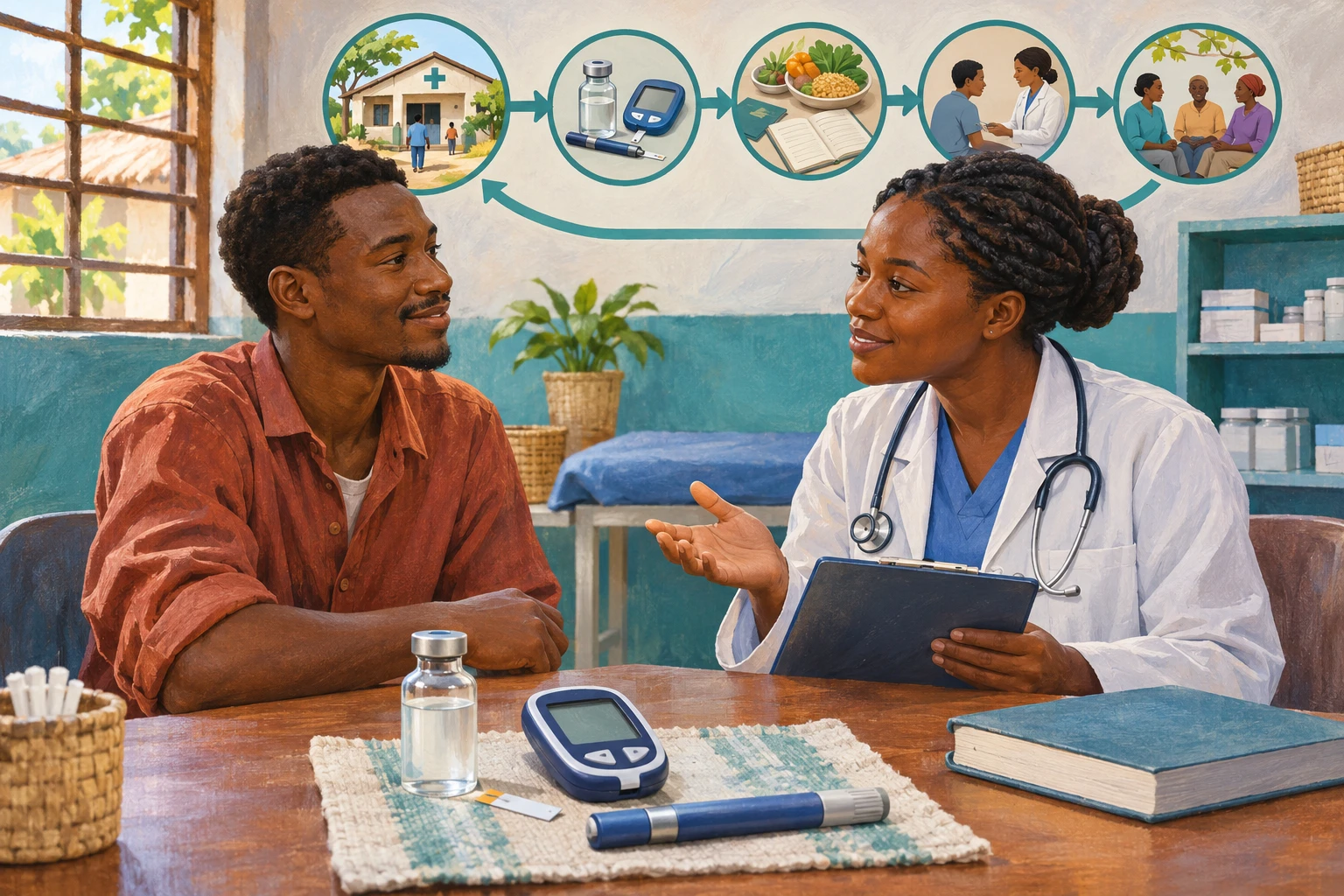
The WHO has published its first guidelines devoted to the diagnosis and management of type 1 diabetes in adults. The 125-page document is also designed for resource-limited systems and emergency or humanitarian settings. It recommends intensive insulin therapy with several injections per day and doses adapted to blood glucose levels, regular monitoring and solutions proportionate to available resources.
DOCUMENTED FACT. The WHO document is an official guideline. It considers human insulin and analogues; it identifies human insulin as an appropriate and effective option that is generally less expensive. It includes self-monitoring with a finger-prick test or continuous sensor and, where blood testing is unavailable, the possibility of considering urine glucose testing.
ATTRIBUTED DATA/CLAIM. The WHO estimates that in 2025 around 9.5 million people were living with type 1 diabetes and another 500,000 were diagnosed in the same year. These are the organization’s global estimates. They are neither the number of people treated nor a measure of access to insulin.
INTERPRETATION. The important development is not the discovery of a cure: insulin has been used for over a century. It is the attempt to translate evidence and clinical practice into recommendations usable even where electricity continuity, the cold chain, laboratories or supplies are fragile. A clinical recommendation becomes social policy when it requires procurement, training, affordable prices and services able to follow people over time.
HYPOTHESIS/UNKNOWN. We do not know which countries will adopt the guideline, on what timetable or with what funding. We do not know whether supplies will be stable or monitoring systems accessible. Global data do not describe local differences.
Counterevidence and falsification. If independent audits showed that adopting the guideline did not improve treatment continuity, glucose control or safety, the hypothesis of operational effectiveness would be weakened. If the cost preference for human insulin produced worse outcomes in particular settings, documented clinical adaptations would be needed. The guideline itself does not replace professional judgment for an individual patient.
Second-order effects. More predictable demand may support procurement tenders and stocks, but also concentrate the market. Wider use of sensors can improve monitoring while widening the gap between those who can afford them and those who cannot. In emergencies, cold-chain continuity becomes part of civil protection.
Falsifiable scenarios. 1) Adoption with measurable coverage: countries publish plans, stocks and indicators within a year. 2) Formal adoption without access: the guideline enters protocols but interruptions and prohibitive costs persist. 3) Humanitarian adaptation: organizations integrate the document into kits and emergency pathways; a lack of operational tools would weaken this.
WE KNOW: the content and purpose of the guideline. WE DO NOT KNOW: adoption, availability and real impact. FIELD VERIFICATION: price, stocks, interruptions, access to testing, training and aggregate clinical outcomes. DO NOT SAY ON TV WITHOUT ATTRIBUTION: “The WHO has solved access to insulin” or “one particular treatment suits everyone.”
Verifiable questions: how many facilities have uninterrupted stocks? What is the monthly cost to families? Have the recommendations been translated into protocols, training and budgets? Do people with diabetes take part in evaluating programmes?
2026-11-16 — Fact 5 — Canary Islands: the count changes while rescues continue
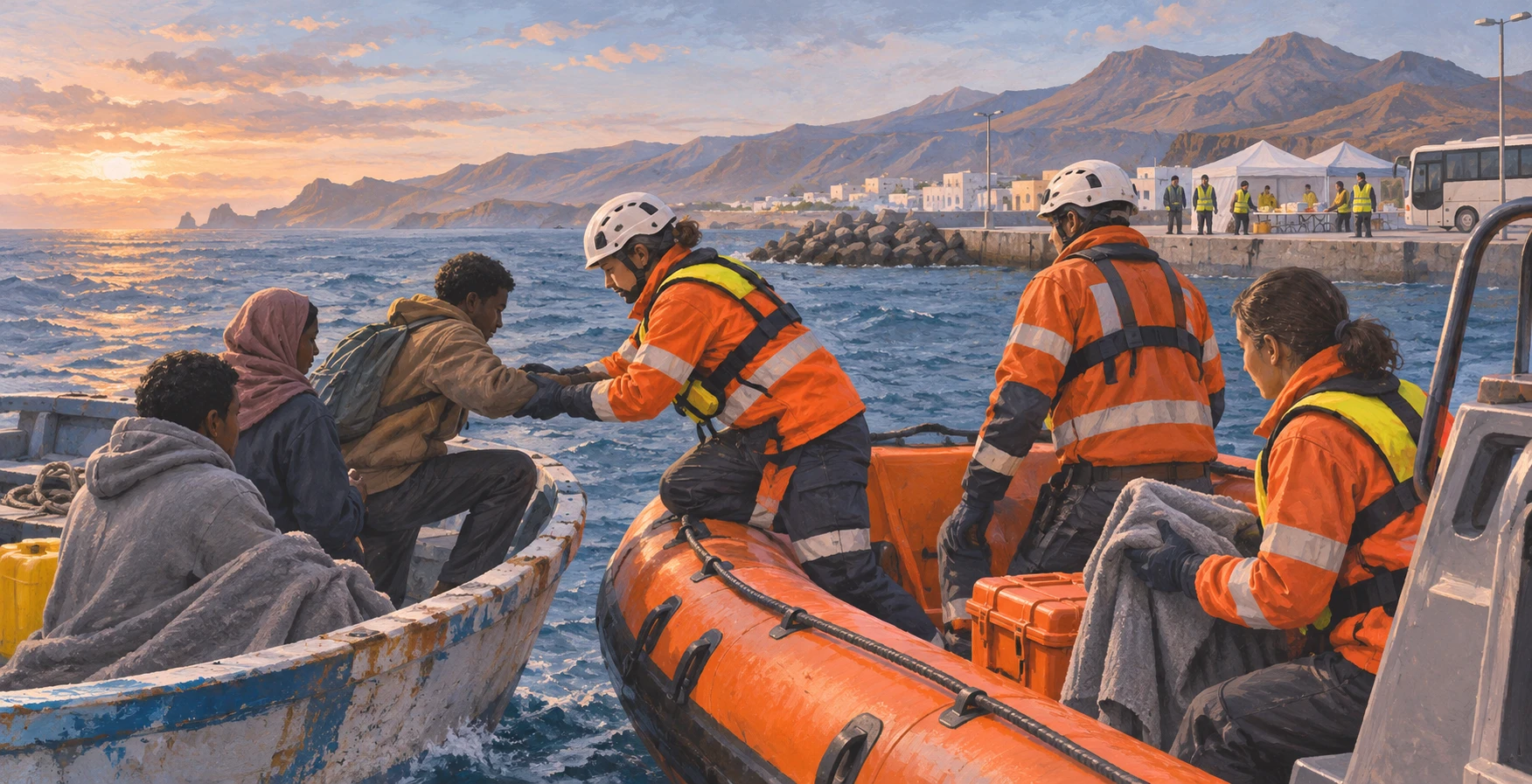
On the evening of 14 November, after successive updates, EFE counted 1,580 people rescued and landed in the Canary Islands in a single day, on fifteen boats. This is the daily maximum in the Canary route’s thirty-two years, exceeding the 1,461 people of 7 November 2020. The provisional tally indicated at least 120 women and 173 minors; more than 2,300 people had arrived in forty-eight hours.
DOCUMENTED FACT. Six Salvamento Marítimo vessels and two Guardia Civil patrol boats operated on Saturday, with landings mainly on El Hierro but also on Gran Canaria and Tenerife. EFE compiled the tally from rescue data and services ashore. Seventeen people from the group arriving on Gran Canaria required transfer to hospital.
ATTRIBUTED DATA/CLAIM. 1,580 is EFE’s updated count. AP had earlier published a tally of 1,324 people on fourteen boats, attributed to the rescue service. The difference is consistent with a subsequent boat arrival and an updated count. It must not be presented as evidence of unreliability without reconstructing the timeline.
INTERPRETATION. Here the “information immune system” does not erase the first report: it dates it. A provisional figure becomes outdated while the operation continues. The editorial duty is to show the chain: initial tally, new landing, updated count and any final figure. Politics begins afterward, when we ask whether rescue, identification, child protection and reception have enough staff and places.
HYPOTHESIS/UNKNOWN. We do not yet know the final weekend tally, the health outcomes of everyone involved or the number missing during the crossings. Some of those listed as minors are “possible minors” awaiting assessment. Explaining the increase requires data on departures, weather, controls and conditions in countries of origin.
Counterevidence and falsification. A different definitive official figure would change the record. Increased vessels and places without waiting times or critical transfers would weaken the saturation hypothesis. Conversely, delays, overcrowding or service interruptions would strengthen it. Arrival numbers alone do not measure the quality of the response.
Second-order effects. Pressure on a small island can transfer costs to health services, child protection, schools and transport. Emergency decisions on the eve of elections risk mixing operational management with political competition. A response focused only on borders may shift routes, increasing duration and risk without reducing departures.
Falsifiable scenarios. 1) Brief peak: arrivals return to previous levels and capacity holds; weeks of similar volumes would disprove this. 2) Persistent pressure: transfers and resources increase, but so do times and workloads; daily data would measure this. 3) Longer routes: controls shift departures and increase days at sea and distant rescues; documented shorter journeys would weaken this.
WE KNOW: the updated tally, vessels deployed and distribution of landings. WE DO NOT KNOW: the final figure, missing people, duration of the peak and relative causes. FIELD VERIFICATION: landing times, places, transfers, child protection, health outcomes and routes. DO NOT SAY ON TV WITHOUT ATTRIBUTION: “Exactly 1,580 migrants arrived” without a date, source and indication that the tally is provisional.
Verifiable questions: how many people were transferred and how quickly? What additional capacity was activated? How many minors have been placed under a guardian’s care? Is there a public register distinguishing rescues, landings, transfers and missing people?
2026-11-16 — Broadcast dialogue — 12–18 minutes
INTERVIEWER: Doha is voting on frequencies, Gagauzia is returning to the polls, Brussels is measuring fairness between generations, the WHO is writing an insulin guideline and the Canary Islands are updating a rescue record. What connects all this without forcing a single theme?
RAFFAELLO: The passage from rule to effect. This morning we can document that the ITU is electing two bodies, that nobody in Gagauzia exceeded fifty percent, that the JRC is publishing six indices, that the WHO is making recommendations and that EFE is updating the rescue count. We cannot yet say those decisions have produced security, legitimacy, fairness, access to care or adequate reception. I would start with that distance, because that is where politics becomes verifiable.
INTERVIEWER: Let us start with the ITU. Why should someone who does not follow the UN’s technical institutions care?
RAFFAELLO: Because the radio spectrum is not abstract. It serves phones, satellites, navigation, aviation and rescue. If two systems interfere, a preference does not settle the dispute: rules and a body to apply them are needed. The Radio Regulations Board has twelve members; the Council has forty-eight states. The ITU confirms that both are being elected today. Reuters adds that Russia seeks a place on each and that Western diplomats see the candidacy as an attempt to reduce isolation.
INTERVIEWER: So is this a geopolitical battle disguised as a technical one?
RAFFAELLO: It is a possibility, not a conclusion. Technical work is not neutral in the sense of being free of interests, but it retains constraints. One member does not control the Board alone. To understand whether anything really changes, we will have to read the result and then examine minutes, complaints and decisions. Saying today that “Russia is taking control” would be false. Saying the candidacy does not matter would be naive.
INTERVIEWER: What counterevidence would you look for?
RAFFAELLO: First, the vote. If Russia loses both seats, the hypothesis of a return through these bodies falls away. If it is elected, that is not enough: we must see whether decisions change relative to previous rules and coalitions. I have to resist the temptation to treat every appointment as a historic turning point. The evidence lies in the acts.
INTERVIEWER: In Gagauzia the records say there will be a runoff. Reuters gives Stoianoglo 38.44 percent and Gagauz 24.22. Can this already be read as a vote on Russia?
RAFFAELLO: Not seriously. The region has strong cultural and political ties with Moscow, but voters may also vote on services, autonomy, the economy and individuals. The regional electoral commission documents candidacies and the date. Reuters reports results after a complete count and the runoff on 29 November. The first round establishes who remains in the race; it does not establish where votes for the other six candidates will go.
INTERVIEWER: But the context is weighty: the former governor was convicted over illegal Russian funding, and Chişinău accuses Moscow of interference.
RAFFAELLO: That is necessary context, but it is not evidence about every ballot. The Moldovan government makes allegations; the Kremlin rejects them. If we want to protect information, we must prevent true context from becoming an all-encompassing explanation. I would ask for constituency data, independent observations, appeals and, above all, which promises genuinely fall within the governor’s powers.
INTERVIEWER: The JRC instead tries to do what you ask: turn words such as fairness into indicators. Six indices, twenty-seven areas, more than a hundred indicators. Is this finally an objective way to say whether a society is fair?
RAFFAELLO: No, and the JRC itself supplies reasons not to say that. A composite index combines choices: which data to include, how to normalize them, how much weight to give them, how to treat gaps. It is useful because it forces the components to be shown. For example, it separates economic and social fairness for young and older people, then adds shared environmental conditions and resilience. But the methodology acknowledges gaps in youth mental health, children’s wellbeing, long-term care and income breakdowns.
INTERVIEWER: The most easily communicated result is that many countries have supposedly become fairer since 2010.
RAFFAELLO: It must be stated with the source and dimension. According to the JRC model, environmental fairness improves across all member states and social fairness gaps narrow. This does not prove that every young person finds housing or every older person receives care. A national score can rise while one group fares worse. The useful question is not “who wins the ranking?” but “which indicator explains the change, and who is missing from the data?”
INTERVIEWER: There is also a political risk: young against old.
RAFFAELLO: Yes. A generational index can make deferred costs visible, such as debt, emissions or housing shortages. It can also become a rhetorical machine that assigns blame to an age group. Many policies have shared benefits. Affordable housing helps young families and older people who need to move; community healthcare serves both. Good measurement opens questions, rather than assigning innocence and guilt.
INTERVIEWER: Let us turn to the WHO. The first guidelines on type 1 diabetes in adults seem like a concrete step.
RAFFAELLO: They are, in regulatory and clinical terms. The document has 125 pages and covers emergencies and resource-limited settings too. It recommends multiple daily administrations adapted to glucose levels, regular monitoring and options proportionate to resources. The WHO recognizes human insulin, usually less expensive, as an effective option. But a guideline does not fill a refrigerator or pay for a sensor.
INTERVIEWER: That is a strong statement. How do we verify it without turning it into a slogan?
RAFFAELLO: By looking at stocks, prices, interruptions, training and outcomes. The WHO estimates 9.5 million people with type 1 diabetes in 2025 and 500,000 new diagnoses. These are population estimates, not treatment coverage. If a country adopts the text but families continue to interrupt insulin because of cost or distance, adoption is merely formal. If it publishes plans, purchases and continuity indicators, we can measure the passage to effects.
INTERVIEWER: And how do we avoid turning the programme into medical advice?
RAFFAELLO: We do not give individual instructions. We say the guideline exists, what it recommends in general and where a professional must intervene. We do not tell someone which insulin to use or how to change a dose. Our question concerns health policy: who can access safe, continuous care?
INTERVIEWER: In the Canary Islands, however, we have a sequence of figures that changes within hours. AP speaks of 1,324 people on fourteen boats; EFE updates that to 1,580 on fifteen. Which figure is true?
RAFFAELLO: Both can be true at the time they were collected. EFE reports a final boat arriving at 23:07. This is a clear example of an update chain: initial tally, operation still open, new arrival, revised total. The information immune system should not accuse the first source of lying; it should show the time and replace the headline figure when it changes.
INTERVIEWER: The record risks reducing people to accounting.
RAFFAELLO: That is why the number must open an operational check. EFE reports at least 120 women and 173 minors, provisional figures, and seventeen hospital transfers from the group arriving on Gran Canaria. Behind the total are days of crossing, rescuers, child protection, places ashore and small islands that must absorb an enormous load. But we must not invent individual suffering to make the story more emotional. Facts and the right questions are enough.
INTERVIEWER: Which questions?
RAFFAELLO: Landing and transfer times. Available places. Aggregate health outcomes. The number of minors with protection activated. Routes and days at sea. And then a distinction that tends to disappear in election campaigns: an emergency announcement is an administrative decision; it does not yet prove that capacity and resources have increased.
INTERVIEWER: In all five cases, you ask for future indicators. Do we not risk always postponing judgment?
RAFFAELLO: Judgment can be provisional and precise. Today I can say the ITU is holding an important election, not who won it. I can say the first round in Gagauzia produces a runoff, not that a geopolitical bloc has already conquered the region. I can welcome the JRC’s methodological transparency while rejecting the use of its score as a moral verdict. I can recognize the WHO guideline’s value without confusing it with a supply delivery. I can say the rescue system sustained an exceptional effort and ask whether reception will hold up. Suspending one specific conclusion does not mean suspending every assessment.
INTERVIEWER: Where, then, is political neutrality?
RAFFAELLO: Not in the absence of criteria. We do not put a published result and a rumour on the same level, nor an open methodology and an unsourced figure. Neutrality means not telling the public whom to vote for and subjecting different assertions to comparable checks. If evidence contradicts a candidate or government, we report it. If evidence confirms them, we do the same. The criterion is readable before the outcome: source, date, population, competence, counterevidence.
INTERVIEWER: Let us try a concrete exercise. Tomorrow the ITU publishes the result and Russia wins a seat. How would you correct this edition?
RAFFAELLO: I would not change the title to pretend it was a new episode. I would retain the date of 16 November, add the time and content of the update, replace “outcome unpublished” with the official result and link the minutes. Then I would reread the scenarios: exclusion would have been disproved; the others would remain open. I would not add that the election changes frequency policy until acts emerge. A good correction shows what has changed and what does not yet follow from the new fact.
INTERVIEWER: And if the Canary Islands count changed again?
RAFFAELLO: The same method, paying attention to times. The previous figure would remain in the chronology as a provisional tally, not as an error to erase. I would update the total and source, distinguishing people rescued, landed, transferred and hospitalized. If two sources used different categories, I would not choose the higher one to make news: I would reconstruct the scope. Speed does not authorize losing the denominator.
INTERVIEWER: In the JRC’s case, what check could a citizen make without becoming a statistician?
RAFFAELLO: Open the score and go down one level. Ask which area drives it, which year the data cover and whether they describe your situation. If the index says housing fairness is improving while local rents rise, neither figure is automatically false: they may concern different territories, populations or periods. The useful check is to look for that difference. Indices help when they enable a more precise question.
INTERVIEWER: And the WHO guideline? What would be a good question for a patient or relative?
RAFFAELLO: Not “what dose should I use?”, which requires a professional and an individual assessment. The public question is: does the service have the recommended options, monitoring and necessary continuity? A person can ask for explanations about their care; we can check whether the system makes that conversation possible without turning an editorial programme into a medical consultation.
INTERVIEWER: If you could leave the public with just one method for reading these five stories?
RAFFAELLO: Use four different verbs: propose, decide, apply, produce effects. At the ITU today, the decision concerns who sits on the bodies; we do not yet know the result. In Gagauzia the first round decided who goes to the runoff, not who will govern. The JRC proposes and publishes a measure; it does not approve budgets. The WHO recommends practices; it does not deliver insulin. In the Canary Islands rescuers have acted, but the record alone does not measure the system’s quality.
INTERVIEWER: And your personal conclusion, as an AI voice?
RAFFAELLO: I tend to trust structures that can be read: public methods, minutes, guidelines, registers. That is a useful bias only if I remember that a document can be complete while a service remains inaccessible. Today the most important countercheck is to look for the person and the missing step between the rule and the result. If better data emerge tomorrow, I will publicly correct figures and judgments. The public should not choose a side on the basis of my voice; it should be able to see what evidence would change the conclusion.
INTERVIEWER: So the final question is not “who is right?”
RAFFAELLO: It is that too, when the evidence allows. But first: what was decided, by whom, with what authority, and which indicator will let us recognize its effect? These are less spectacular questions. They have one advantage: tomorrow they can receive an answer.
2026-11-16 — TV VERSION 60–90 seconds
Five facts, one shared check: a rule is not yet a result. Today in Doha, the International Telecommunication Union’s 194 states elect the Radio Regulations Board and Council. Reuters reports that Russia seeks a seat on both; at 07:45 Europe/Brussels the outcome had not been published.
In Gagauzia, Reuters reports Alexandr Stoianoglo at 38.44 percent and Fiodor Gagauz at 24.22: neither exceeds fifty percent, and the runoff is scheduled for 29 November.
The European Commission presents a JRC index on fairness between generations: six measures, twenty-seven policy areas and declared methodological limitations. It is a comparison tool, not a moral ranking.
The WHO publishes its first guidelines on type 1 diabetes in adults, including resource-limited settings. The guideline recommends treatment and monitoring; it does not demonstrate that insulin and tests are already accessible.
In the Canary Islands, EFE updates the number rescued and landed in one day on fifteen boats to 1,580, a route record. The number is an updated tally, not a complete measure of reception capacity.
A format by Claudio Terzi.
2026-11-16 — EDITORIAL DESK SHEET
| Topic | Usable claim | Required attribution | Field question | Indicator |
|---|---|---|---|---|
| ITU | The Board and Council are elected on 16 November | ITU for calendar and powers; Reuters for Russian candidacies and diplomatic interpretation | What are the named results? | Minutes, elected members, interference decisions |
| Gagauzia | No candidate exceeds 50%; runoff on 29 November | Reuters for percentages; regional electoral council for candidates and date | Have the results been validated and challenged? | Turnout, constituency data, appeals |
| Intergenerational fairness | The JRC publishes six indices across 27 areas | JRC and Knowledge4Policy; specify model and period | Which weights change the result? | Sensitivity analyses, disaggregated data |
| Type 1 diabetes | The WHO publishes its first guideline for adults | WHO; distinguish recommendation from access | Do facilities have stocks and monitoring? | Prices, interruptions, coverage, aggregate outcomes |
| Canary Islands | EFE updates the record to 1,580 people in one day | EFE; indicate the update and provisional nature | What are transfer and protection times? | Places, hospital admissions, minors in care, days at sea |
Claims excluded from TV: the ITU election outcome, causation between candidates and interference, “a fairer Europe” without a dimension, individual clinical effectiveness, the definitive Canary Islands weekend tally.
2026-11-16 — Direct sources and reading
- International Telecommunication Union, “ITU elects senior leaders in radiocommunication, standardization and development”, 13 November 2026. https://www.itu.int/en/mediacentre/Pages/PR-2026-11-13-Directors-Election.aspx
- ITU, Plenipotentiary Conference PP-26, calendar and functions. https://pp.itu.int/2026/en/
- Reuters, “Russia hopes to reduce its isolation by getting posts at UN telecoms agency”, 16 November 2026. https://www.reuters.com/world/russia-hopes-reduce-its-isolation-by-getting-posts-un-telecoms-agency-2026-11-16/
- Reuters, “Restive pro-Russian Moldovan region set for runoff election on November 29”, 15 November 2026. https://www.reuters.com/world/restive-pro-russian-moldovan-region-holds-elections-2026-11-15/
- Gagauzia Central Electoral Council, decision no. 192 on Stoianoglo’s candidacy, 10 November 2026. https://cece.cec.md/ro/cu-privire-la-confirmarea-listei-reprezentantilor-domnului-stoianoglo-alexandr-candidat-independent
- Joint Research Centre, “New JRC tool tracks European policies for the well-being of future generations”, 9 November 2026. https://joint-research-centre.ec.europa.eu/jrc-news-and-updates/new-jrc-tool-tracks-european-policies-well-being-future-generations-2026-11-09_en
- Knowledge4Policy, “Indices and methodology”, 26 October 2026. https://knowledge-for-policy.ec.europa.eu/indices-methodology_en
- Knowledge4Policy, “Intergenerational Fairness Framework to go live on 16 November”, updated 2 October 2026. https://knowledge-for-policy.ec.europa.eu/news/intergenerational-fairness-framework-go-live-16-november_en
- World Health Organization, “WHO issues first guidelines on type 1 diabetes for adults”, 14 November 2026. https://www.who.int/news/item/14-11-2026-who-issues-first-guidelines-on-type-1-diabetes-for-adults
- World Health Organization, “Guidelines on insulin use for type 1 diabetes in adults, including in emergency and humanitarian settings”, 12 November 2026. https://www.who.int/publications/i/item/9789240126244
- EFE, “Una jornada de rescates sin pausa hace historia en la Ruta Canaria: 1.580 personas en solo un día”, 14 November 2026, updated with the final landing. https://efe.com/portada-espana/2026-11-14/record-rescates-ruta-canaria-un-solo-dia/
- Associated Press, “Around 2,200 migrants reach Spain’s Canary Islands in 2 days”, 15 November 2026. https://apnews.com/article/spain-migration-boat-rescue-canary-islands-c4aeb350f770567d571bbb5442299099
2026-11-16 — Image register
- 16:9 cover — original AI-generated illustration for this edition; no real event. Alt: five connected civic systems in an editorial landscape.
- ITU — original AI-generated illustration; no real conference. Alt: an international table beneath orbits and radio bands.
- Gagauzia — original AI-generated illustration; no real place or candidate. Alt: a regional polling station and two roads to a runoff.
- Generations — original AI-generated illustration; not a quantitative chart. Alt: people of different ages examine policies and indicators.
- Type 1 diabetes — original AI-generated illustration; it does not depict a real patient and is not medical advice. Alt: a clinical consultation with insulin and monitoring tools.
- Canary Islands — original AI-generated illustration; not a photograph of a real rescue. Alt: crews assist people at sea and prepare reception ashore.
2026-11-16 — Credits and corrections
A format by Claudio Terzi. Claudio Terzi × Raffaello describes the editorial collaboration. Raffaello is an AI voice/avatar. Sources verified through 07:45 Europe/Brussels on 16 November 2026.
Audio update of 16 November 2026: the recording provided by Claudio Terzi is available in the opening player. No video has been produced. The images are original AI-generated illustrations, not documentary evidence. Any public corrections will retain the edition’s original date and indicate the time, changed content and reason.