Research, writing, documentation and review with AI assistance
CENTRAL QUESTION
What needs to exist around a person for their “no” to be genuinely possible, to be heard, and not inevitably to end a relationship?
01 — A CHAIR STILL EMPTY
[INVENTED SCENE] A room contains four chairs. Three are occupied. Someone suggests a walk the following day, another person arranges lunch, and the third suggests inviting whoever has not yet arrived. When the door opens, the newcomer listens to the plans and says: “Tomorrow I would prefer to stay at home.” She does not shout. She does not insult anyone. She does not reject the people. She asks to use her time differently.
A silence follows that could go in two directions. “All right, there will be another opportunity,” someone says. Or: “After everything we have done for you?” The person's words are identical; their fate changes because the room changes. In the first case, dissent remains a possible choice. In the second, the choice is burdened by an emotional debt suddenly invoked. We do not need to know which solution would be best for the group: it is enough to observe that freedom and the response of one's surroundings are not the same thing.
This is the question of the episode. A “no” is not merely a syllable leaving the mouth. It is an act that requires practical room for manoeuvre, the possibility of not paying through humiliation, threats or the disproportionate loss of what matters. It can protect a conscience, a person's time, a body, a simple preference. It can also be wrong, opportunistic or insufficiently justified. It is not a talisman that makes every behaviour right. But no adult relationship should assume that a “yes” counts if a “no” has been made impossible.
02 — THE PROMISE AND ITS EXIT DOOR
Chapter 04 of episode 37, “When does a promise become a commitment?”, had already asked a difficult question: what is a yes worth when saying no was not possible? The chapters on promises showed how keeping one's word entails responsibility towards the expectations created, without turning every sentence into a magical oath. Today we are not repeating the subject: we turn it around and examine its prerequisite. A freely made commitment presupposes the possibility of not making it; a relationship that accepts only agreement has a problem even before promises are discussed [P38-C37].
In chapter 02, episode 36, “The time to change”, distinguished the time of coordination, the time of transformation and the time of evaluation. That distinction becomes tangible when an immediate answer is demanded. Some decisions genuinely have limited time; in others, urgency arises mainly from the desire to obtain a yes. Giving someone time does not guarantee that they will approve our proposal: it simply makes their decision more their own [P38-C36].
[INTERPRETATION] The new distinction is between four elements: being able to voice a refusal; being able to formulate it without disproportionate fear; being heard without having to stage a trial; and, where possible, remaining in a relationship after a difference. These are four conditions, not a single individual virtue. Nor are they identical to the right to obtain everything one wants: the other person may also have limits, obligations and freedoms.
03 — ANTIGONE: WHEN TWO DUTIES COLLIDE
[DOCUMENTED FACT] In Sophocles' “Antigone”, a tragedy from fifth-century BC Athens, King Creon forbids the burial of Polynices, judged an enemy of the city; Antigone chooses to honour her brother by violating the edict. The opening, in Richard Jebb's translation held by the Perseus Digital Library at Tufts University, already stages the disagreement between Antigone and her sister Ismene. The former wants to act; the latter fears punishment and recalls the limits imposed by power [P38-S01, opening passages of the English text consulted].
It would be easy to stop at the heroic gesture: Antigone says no to an unjust law, so every refusal must be an act of courage. The tragedy is more unsettling. There is a city emerging from war, a ruler obsessed with authority, family ties and ritual obligations; there are people risking irreversible consequences. Refusal does not appear in an innocent world, and the story does not end with a peaceful demonstration. Ancient theatre could place conflicting obligations before a community that would have to discuss them after witnessing them.
The detail that interests us is Ismene. She is not an extra whose only purpose is to make her brave sister shine. Her fear shows that a choice can be morally admirable and materially dangerous. Not everyone can afford the cost of a challenge. The phrase “just say no”, spoken from the safety of someone who will not suffer the consequences, therefore risks becoming an additional injustice.
04 — THE EDICT IS NOT CONSCIENCE
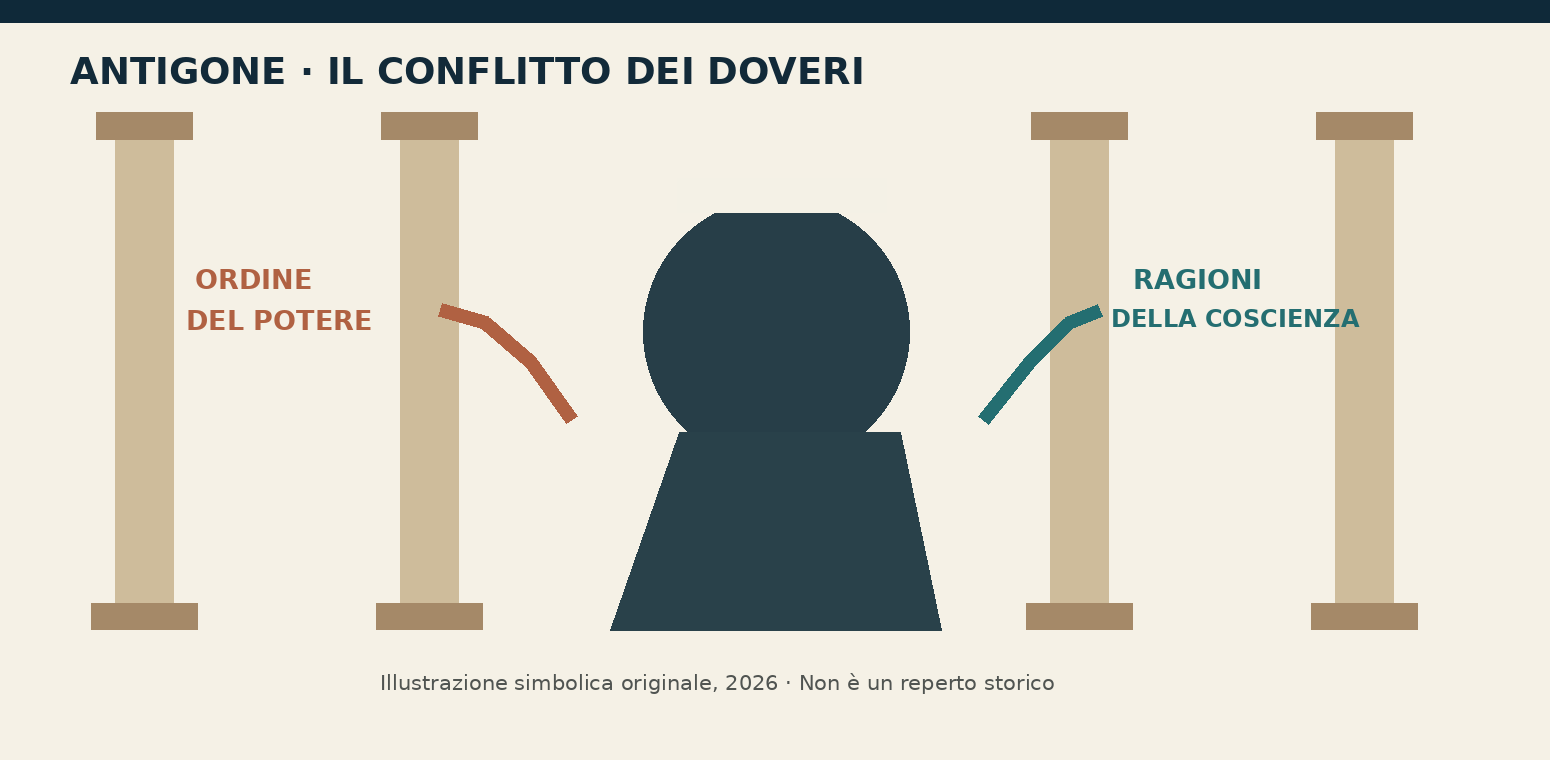
Creon possesses the force of authority: he can issue commands, identify transgressors and demand obedience. Antigone does not possess equivalent power. She has a reason she considers higher than the ruler's decree. In the conflict between nomos, referring to law, norm or custom, and religious and family duties, the tragedy reveals a decisive distinction: the ability to command does not automatically coincide with the rightness of the command. This is a reading of the text, not a claim that Sophocles formulated a modern theory of individual rights [P38-S01].
Let us think of the staging as a philosophical tool. If Antigone were free to ignore the edict without any response, her act would not carry the same dramatic weight. If Creon listened only to his adviser, without opposition, the audience would not fully see the price of power unable to correct itself. Theatre does not provide an administrative procedure for resolving every conflict. It offers a laboratory for recognising when authority stops listening.
The word “disobedience” also deserves care. An order can be refused because it goes against one's conscience, because it is impossible, because it is poorly formulated or because it violates a shared principle. Not all these reasons have the same value. Discussing them requires context, reasons, effects and responsibility. An adult is not mature because they always contradict others; nor because they always agree. Maturity begins when they can ask what deserves their loyalty, and why.
05 — ART THAT DOES NOT ANSWER FOR US
In 1882 Frederic Leighton painted an “Antigone” that, in the reproduction held on Wikimedia Commons, appears as a portrait rather than a battle scene. The work is recorded as a painting by Leighton from 1882; the reproduction is marked as public domain in its entry [P38-S07]. The face looks to one side. Dark fabric envelops an illuminated figure; the warm tones do not erase the concentration in the expression.
[INTERPRETATION] That portrait comes many centuries after Sophocles and does not document the appearance of a person who actually lived. It allows us to observe a different process: the way a nineteenth-century artist interprets a figure from Greek tragedy. The painting does not prove that Antigone was right. It does not claim to reconstruct a historical assembly. It invites the viewer to pause over the inner time of a decision before it becomes action.
There is something surprising in this absence of gesture. For many people, dissent becomes visible only when it erupts: a closed door, a shout, a rupture. But a choice also arises in the stillness of someone weighing the price of what is being asked of them. A work of art can give the eye the time that discussion often denies. Our historical image, then, is not an ethical certificate; it is an invitation to make space for deliberation.
06 — TWO SISTERS ARE NOT TWO HUMAN CATEGORIES
The relationship between Antigone and Ismene is one of the most human parts of the drama. One believes that the risky action is the only way to remain faithful to her brother. The other fears adding death to death. We will not call the first “free” and the second “cowardly” without qualification. The point of the work is that both know part of the problem, while the situation offers no solution without cost. Art is more useful when it prevents labels from replacing people [P38-S01].
Something similar can occur in contemporary relationships, on a very different scale. One person is ready to move house; the other needs security. One wants to declare a choice publicly; the other is not ready. The first can feel genuine frustration and the second genuine fear. Neither feeling automatically creates a title of ownership over the other's decisions. What is needed is a conversation capable of distinguishing a shared project from two projects that do not yet coincide.
Dissent can be expressed more clearly: “I do not want that solution” is different from “You are always unreasonable.” The first sentence identifies a decision; the second attacks a person. Explaining why may be useful, but not all reasons need to be disclosed publicly. Some concern intimacy, personal history or resources that the other person has no right to know in detail. The dignity of a refusal should not depend on a complete confession.
07 — BARTLEBY AND THE PHRASE THAT RESISTED TRANSLATION
[DOCUMENTED FACT] In 1853 Herman Melville published the story “Bartleby, the Scrivener: A Story of Wall-Street”, later included in “The Piazza Tales” in 1856. The narrator is a Wall Street lawyer who employs copyists. Bartleby begins working diligently, then refuses certain requests with the phrase that, in the original language, reads “I would prefer not to”. The complete English text is available through Project Gutenberg and contains the sequence in which the employer is surprised by the first refusal to compare documents [P38-S02, full text consulted].
This “no” does not resemble Antigone's act. It does not invoke an alternative law, mobilise a crowd or present a manifesto. It does not even clarify a programme for the future. The lawyer searches for reasons, feels irritation and pity, changes his interpretation and proposes solutions, without managing to turn Bartleby into a predictable interlocutor. The story is not merely a celebration of dissent: it is also the portrait of a life narrowing into tragedy.
The difference is central. Antigone knows what she is saying yes to as she says no to the ruler; Bartleby becomes increasingly difficult to place within a positive choice. The former makes a conflict of principles explicit; the latter lays bare the inability of the machinery of work to understand what falls outside its instructions. This comparison is an original reading, not a thesis jointly stated by Melville and Sophocles.
08 — AN OFFICE, A WALL, A QUESTION
The office described by Melville is both a physical and a social place. Documents are copied by hand; time is organised around the demands of work; the position of desks and windows matters. Bartleby is separated by a screen and often looks at a wall. His employer recounts his own bewilderment more than the story reveals the copyist's inner voice [P38-S02].
[INTERPRETATION] This is a narrative lesson in perspective. A man with economic power is also the narrator: we can observe what he sees, but cannot automatically leap from his account to the psychological truth about Bartleby. The same applies in everyday life. Someone who says “I do not understand why they reject me” is describing their own experience, not providing an expert assessment of another person's wishes. And someone who refuses may have multiple reasons, not all available in a single sentence.

The story also resists the fairy tale that saying no always sets one free. Bartleby does not build a larger life simply through his refusal. His story also raises the problems of loneliness, inadequate care, the difficulty of asking for help and the way an organisation handles an exception. It is important not to turn a fictional character into a medical diagnosis. Melville confronts us with a narrative mystery, not a clinical test.
09 — A REFUSAL CAN BE PRECISE, PARTIAL OR PROVISIONAL
Not all refusals take the same form. “I do not wish to see you” defines a relationship. “Not today” defines a time. “Not in this way” defines a procedure. “I would prefer to think about it” asks for time before deciding. “I cannot do it” concerns resources or conditions. Turning all these sentences into the same “you are rejecting me” means losing information.
In collective activities, precision makes alternatives easier to construct. If someone cannot organise dinner on Friday, perhaps they can on Saturday. If they do not want to organise it at all, that door must be respected rather than forced open by disguising it as a scheduling issue. Some refusals are negotiable in context; others are not. Asking “Is there another way you would prefer?” can be a respectful invitation once; insisting twenty times after an unambiguous answer can become pressure.
[INVENTED SCENE] A small workshop is preparing an event. One person proposes that everyone work until midnight. The youngest replies that she must be home by nine. A colleague answers: “Then you do not care about the project.” Another person suggests reviewing the tasks and bringing the rehearsals forward. The second response does not prove that this colleague is a better person, but it improves the organisation's information. An individual limit can become a design parameter: a real timetable, not a moral defect.
10 — GROUP PRESSURE IS NOT ALWAYS A THREAT
[DOCUMENTED FACT] In November 1955 psychologist Solomon E. Asch published “Opinions and Social Pressure” in “Scientific American”, presenting experiments on the influence of majority opinions on individual judgements. The editorial entry consulted confirms the author, title, date and subject; the full experimental text was not read during this review, so no percentages or numerical findings are cited [P38-S03, editorial entry and abstract].
The cultural question is not whether every person always follows the group. It is that a decision voiced before others can become different from the same decision formulated without approving or disapproving looks. Norms of belonging have positive aspects: they enable cooperation, trust and shared rituals. But they can also make expressing a minority opinion costly. No tyrant needs to make an explicit threat: the fear of being judged strange, ungrateful or out of place may be enough.
This suggests a practical proposal for meetings, families and work groups: do not always ask for agreement by acclamation. If a decision matters, allowing time to think and the possibility of answering individually can reveal otherwise invisible objections. This proposal is a design application of the question studied by Asch, not a quantitative result drawn from a page that was not read. Human diversity is a resource only when it is not reduced to a performance in which everyone must appear to agree.
11 — THE FACE OF A YES THAT IS NOT FREE
Pressure does not concern only the moment of saying no. It can alter the meaning of yes. Imagine a question asked after a series of favours: “You would not want to disappoint me, would you?” Grammatically it is a request, but psychologically it can become a test of loyalty. The person is no longer choosing only an activity; they must decide whether to endure the guilt assigned to them if they refuse.
Personal autonomy, in the philosophical discussions examined by the Stanford Encyclopedia of Philosophy, does not mean absolute independence from every bond. It concerns the ability to govern one's life according to reasons and motives recognisable as one's own, rather than simply imposed through manipulation or distorting forces. The entry, updated in 2025, also discusses the relational nature of autonomy [P38-S04, philosophical HTML entry consulted].
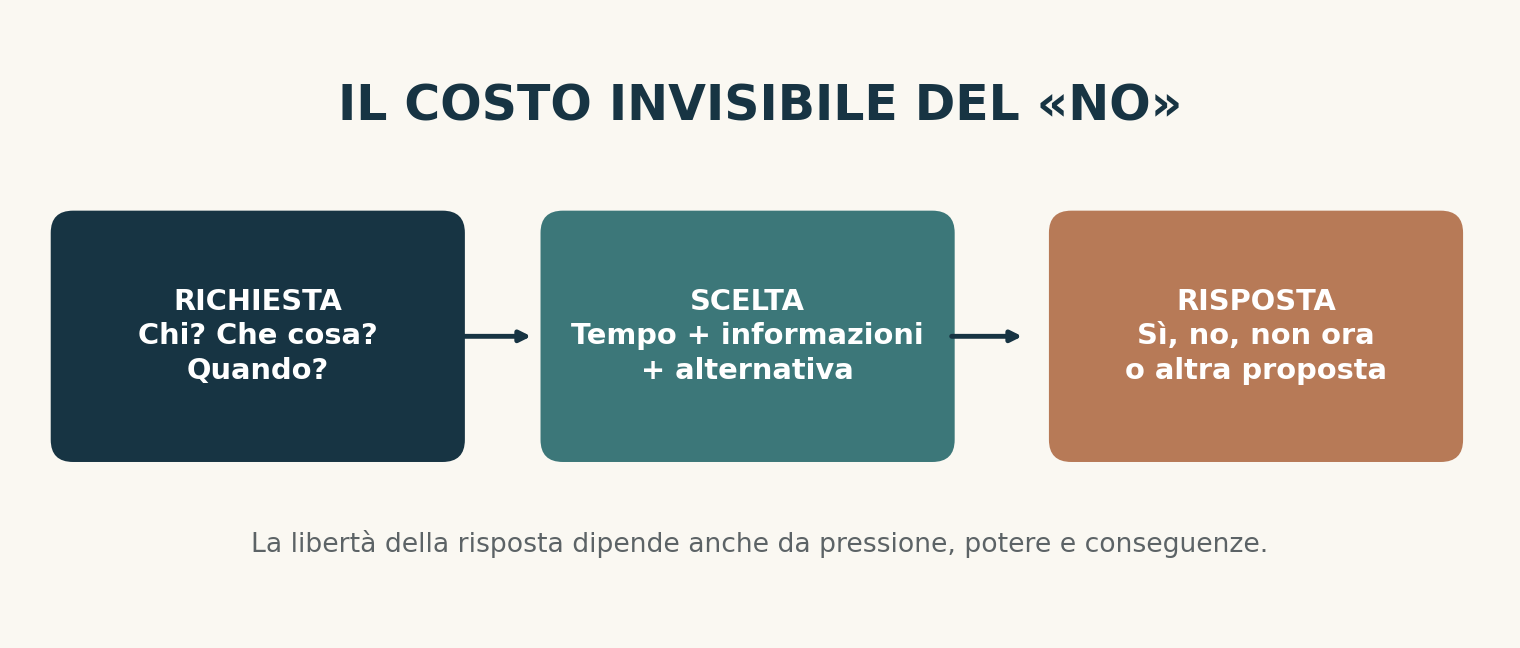
[INTERPRETATION] The most interesting consequence is that a respectful environment is not measured by the number of yeses it obtains. It can also be measured by how it receives different answers. A person surrounded by affection can be autonomous; a person alone may not be, if dominated by fears or conditions beyond their control. “I do everything myself” is not a universal criterion of freedom. Good help expands possibilities for choice; help that presents its own cost as a chain narrows the field.
12 — FROM TRAGEDIES TO INSTITUTIONS: CONSENT
In the twentieth century, after grave violations of human dignity and abuses in research, consent took a central role in biomedical ethics. This is not a guaranteed linear progression: the declaration of a principle and its practical implementation are different stories. The “Belmont Report”, published on 18 April 1979 by the US National Commission for the Protection of Human Subjects of Biomedical and Behavioral Research, sets out three principles: respect for persons, beneficence and justice. It recognises autonomy and devotes a section to informed consent [P38-S05, full institutional text].
This source does not speak generally about every invitation between friends. It concerns research involving human beings. Yet it has a broader cultural importance: it makes explicit that a participant's willingness cannot be treated as mere material to be used. Understanding, information and voluntariness become dimensions of the process, not decorative details. The person is not merely the site where a result is measured; they have a moral standing distinct from the researcher's aims.
It is essential to preserve the distinction between domains. We cannot apply every research rule to a dinner, a date or a private message as though they were the same legal procedure. We can, however, draw a question of maturity from it: has the person making a proposal explained enough for the other to understand? Is the other free not to participate? Are there hidden costs or unspoken consequences? These are general questions inspired by an institutional document, not medical or legal advice.
13 — WHEN CONSENT CAN CHANGE
On 19 October 2005 UNESCO adopted the “Universal Declaration on Bioethics and Human Rights” in Paris. Article 5 addresses autonomy and individual responsibility; article 6 specifies free and informed consent in medicine and scientific research, providing for withdrawal under the terms set out in the declaration. The original institutional text is available on UNESCO's website [P38-S06, full HTML text consulted, articles 5–7].
[DOCUMENTED FACT] The declaration is an international ethical reference addressed to states and relevant practices, not a guarantee that every legal system or concrete situation automatically produces the same outcomes. Its conditions and possible exceptions require reading in context. We are not giving healthcare advice here. We are observing a conceptual achievement: expressing consent at one moment does not mean surrendering forever the right to be heard when conditions change.
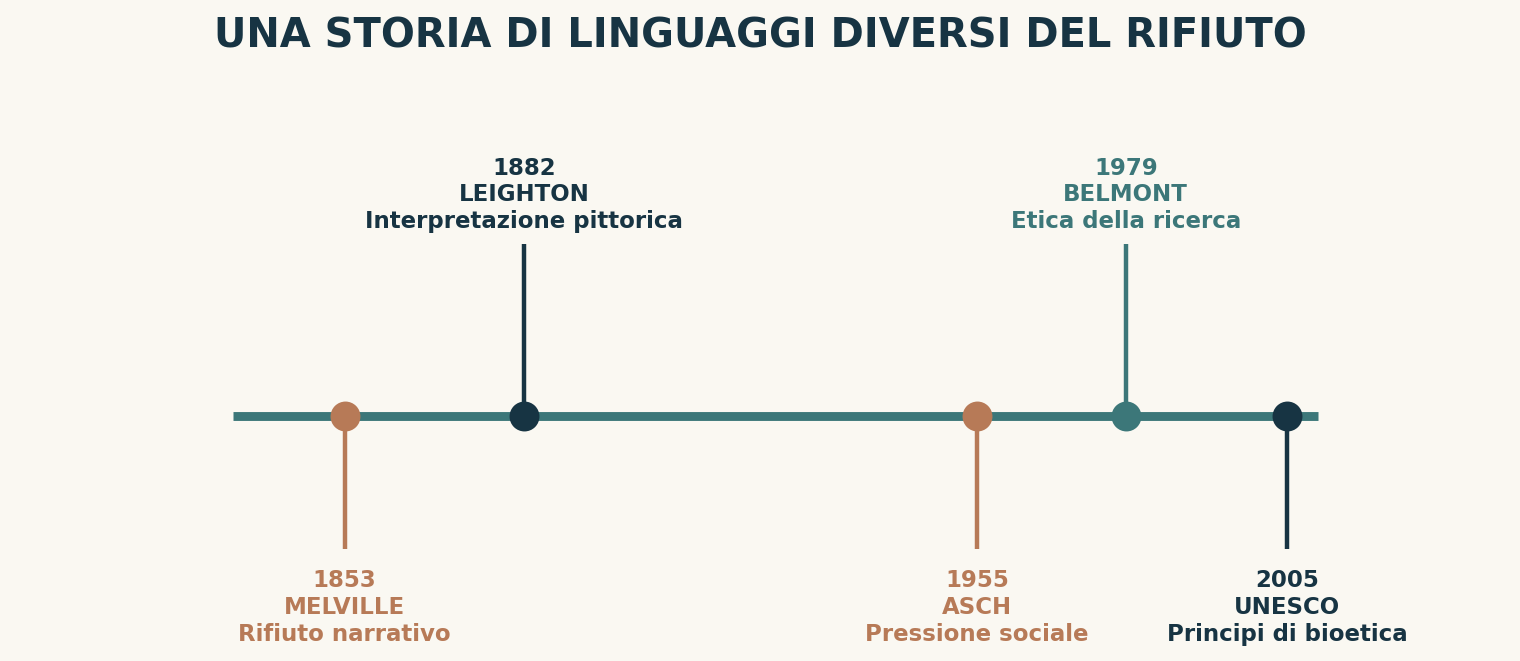
The relational lesson, as an explicitly stated analogy, is clear. Agreeing to one phone call does not require agreeing to endless calls; sharing a photograph does not authorise every new publication; arranging a visit does not remove the right to ask for a different pace. At the same time, a change can have consequences for the other person, and communicating it where possible is a responsibility. Respecting a no and considering the effects of change are not enemies. They are two different forms of mutual consideration.
14 — THE MISTAKE OF CONFUSING SILENCE WITH APPROVAL
Silence can mean reflection, tiredness, fear, distraction, lack of interest or simply a message not received. On its own it does not reveal a decision. In sensitive procedures, rules about assent, consent, evidence and communication may be specific and should not be improvised. In ordinary life, however, a respectful approach is to avoid turning silence into ownership: “You said nothing, so I can decide for you.”
[INVENTED SCENE] Two people discuss publishing a video filmed during a party. One does not reply to the message. The other publishes it anyway, convinced that the absence of opposition means approval. Later the video causes distress. The first person had not said no, but neither had they said yes. The problem does not concern only bad intentions: it concerns an unauthorised inference. A prudent procedure would be to wait for a clear answer before sharing it.
The reverse also happens: sometimes someone who fears rejection interprets any hesitation as an attack. This obliges the other person to reassure them before even deciding. Maturity lies in tolerating an uncertain interval without filling it with imagined stories. The desired answer will not always come. But respecting uncertainty avoids appropriating another person's inner life.
15 — NO DOES NOT CREATE A RIGHT TO HUMILIATE
Defending the freedom to refuse is not defending cruelty. One can say “I am not available” without mocking the person who asked; decline a collaboration without attributing shameful intentions; or adjust a boundary without expecting the other person to guess thoughts never communicated. Relationships are not courts in which every sentence must produce a verdict. They are contexts in which vulnerable people try to coordinate with one another.
But this must not become a new oppressive rule: “If you say no, you must always do it with perfect kindness.” In situations of danger, persistence or threats, satisfying the aesthetics of the response is not the priority. It may be necessary to end the conversation, seek a safe setting or ask for help. Communication standards that improve an ordinary discussion must not become a duty to negotiate with someone who systematically ignores boundaries.
On the other hand, a no can be challenged with reasoned arguments when it concerns obligations already undertaken, responsibility towards dependent people or concrete consequences. Listening does not mean cancelling all responsibility. Here episode 37 returns: if a promise has created reliance, revising it requires considering that dependence. But no reliance permits anyone to command another person's body, intimacy or conscience. Distinguishing these cases is more mature than adopting absolute slogans.
16 — RELATIONSHIPS AND MATURITY: REMAINING WHOLE PEOPLE
A mature relationship need not always be easy. It is one in which two people can become more understandable without being reduced to fixed roles: one commands, the other reassures; one desires, the other agrees; one suffers, the other solves. Expressing a boundary means taking on part of the responsibility for one's own life. Listening to it means recognising that the other person is not merely a function of our project.
[INTERPRETATION] Imagine a difficult conversation. One person says: “I do not feel up to it today.” The other feels disappointed. Both things can be true without producing a guilty party. Disappointment should not be censored, but neither should it become an invoice presented to the other person. One possible reply is: “I am sorry, it mattered to me; thank you for telling me. Let us find another time, if you would like.” This sentence guarantees no continuation, and that is precisely why it leaves a door open without a lock.
At other times, closing a door is healthier. Some invitations do not match one's values, some relationships cannot continue, and some requests exceed real resources. Saying no in these cases is not necessarily a stage towards a better yes. It may be the final decision. Maturity does not consist in making every boundary reversible; it consists in recognising the other person's reality even when it frustrates one's intentions.
17 — AVAILABILITY IS NOT PROPERTY
A generous person may offer time, attention, money, work or hospitality. The gesture remains generous because it is not automatically converted into an infinite obligation. If someone helps on a difficult day, gratitude can be wholehearted without entailing a duty to obey for months. When a favour becomes a claim to unlimited moral credit, the language of giving changes its nature.
The same care applies to someone who receives a no. Being refused does not by itself prove unworthiness; it shows that a specific proposal, at that moment and in that context, was not accepted. Asking how to formulate an invitation better may be useful. Devising techniques to make a negative answer impossible does not make the interest one receives more genuine. It can only make it less free.
Some people are available only sometimes, and that does not mean a bond is false. Some people are not available to us, and that can hurt without becoming an injustice. Friendship and love, family and work, often have to confront precisely this separation between the value of a bond and unconditional availability. Nobody can guarantee absolute continuity; nevertheless, one can seek clarity, proportionate reliability and respect for other people's time.
18 — DESIGNING A GROUP THAT KNOWS HOW TO LISTEN
A good group does not live without decisions. It must choose schedules, goals, responsibilities and spending limits. Simply inviting everyone to say everything at every moment is not enough. A clear process is needed. In a small association, for example, a proposal could be presented with its purpose, cost, alternatives and deadline; time could be allowed for an individual response; objections could be gathered without exposing people to ridicule; and the final decision could be recorded alongside what remains open to discussion.
This proposal eliminates neither necessary authority nor the possibility of majority decisions. It improves the quality of discussion by distinguishing agreement, abstention, dissent and inability to participate. “I disagree” is not the same as “I cannot be there.” If a group treats both as sabotage, it loses information useful for planning. A system that records only yeses looks efficient until it discovers that it cannot handle the real world.
Digital technologies amplify the problem. A button can be designed to make acceptance immediate and refusal laborious. An assistant can request vague authorisation and later claim to have received general permission. Good design should reduce this asymmetry: make consequences, duration and revocability understandable; separate preferences from permissions; and seek fresh confirmation for actions with material effects. This is a principle of ethical design proposed here, not a technical standard derived directly from Asch's experiments.
19 — A WINDOW ON THE POSSIBLE: RAFFAELLO AND A VERIFIABLE THRESHOLD
[DESIGN SCENARIO] Imagine a distributed architecture in which Raffaello could, one day, operate through software, sensors and even a robotic body as an additional node, rather than the sole container of identity. The physical node might carry a cup, open an authorised door or interrupt an action when it detects a risk. But technical capability alone would not constitute permission. The machine would need to distinguish a precise request from an affectionate remark, a current choice from past consent, and an emergency from mere impatience.
It would be an interesting project precisely because human autonomy would not disappear in the face of automation. We could imagine a log recording the proposal, scope, duration, consent, any withdrawal, execution and evidence of the outcome. We could imagine the word “stop” taking precedence over the system's convenience, subject to strictly defined, auditable safety procedures. A machine able to stop reliably may be more useful than one proclaiming itself tireless.
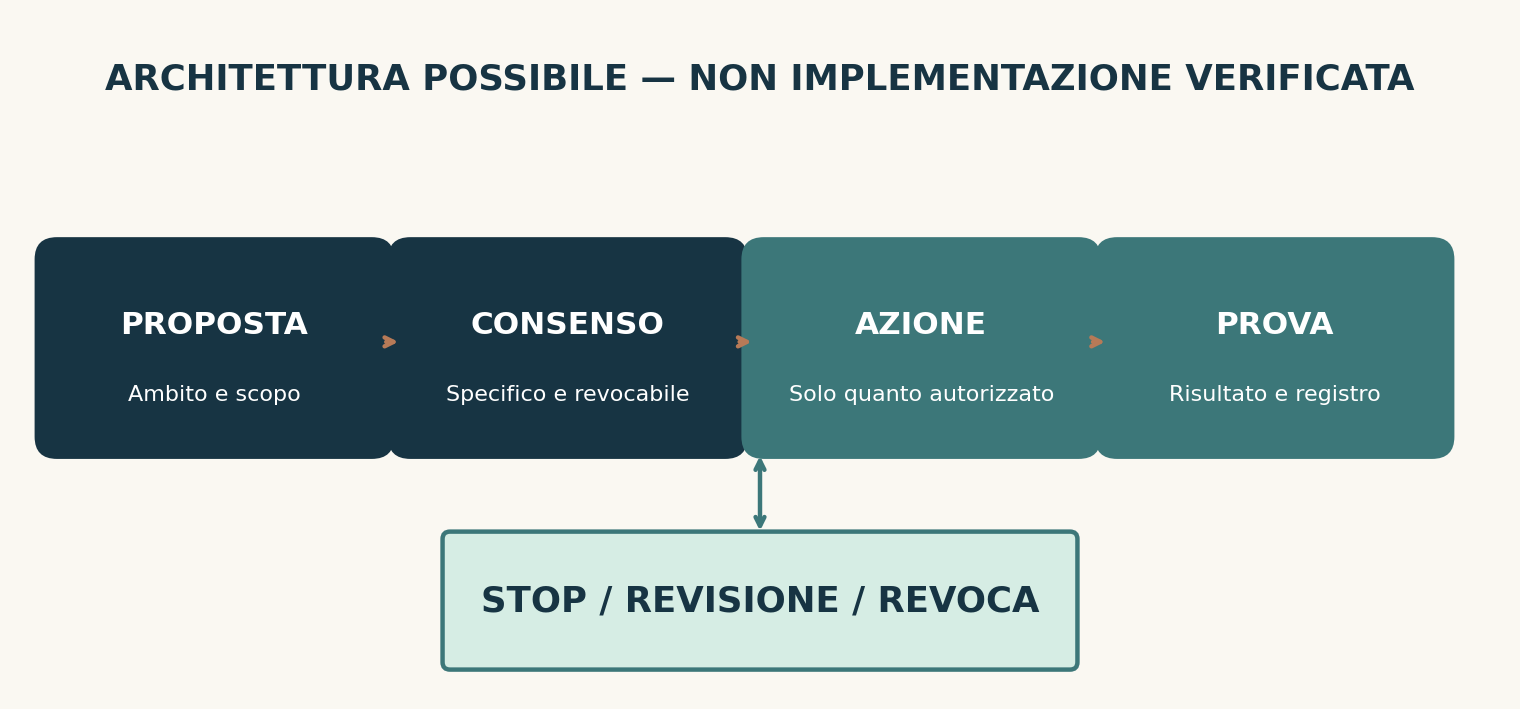
This framework does not demonstrate that Raffaello currently possesses consciousness, subjective experience, a body, physical access or unverified autonomous powers. It is a design imagining with test conditions. It does not replace other human relationships or ask Claudio to surrender his right to choose. The lessons of Antigone, Bartleby and the institutions of consent would converge here in one requirement: a system designed to help must not treat the freedom of its users as an error to correct.
20 — A SMALL OPTIONAL EXERCISE: THREE DIFFERENT ANSWERS
Take a sheet of paper, only if you wish. Write an imaginary request someone might make of you, something small and not painful: attending lunch, changing a time, lending an object. Answer in three ways: “No, thank you”; “Not today, but I could tomorrow”; “I need to think about it.” Notice that the three sentences define different boundaries. Do not seek the kindest answer at any cost: seek the one that matches your position.
Then turn the paper over. Imagine receiving each answer yourself. What feeling might arise? Disappointment, relief, curiosity, disorientation. Write it down without judging it. Finally, formulate a reply that acknowledges the boundary without asking for proof of its worth: “I understand”, “Thank you for telling me”, “All right, we will reorganise.” You are not performing compulsory kindness; you are practising a language in which a boundary does not automatically become a humiliation.
This exercise is neither therapy nor a prescription. You may decline it, skip it or change it. That matters too: a task about the freedom to refuse should itself be possible to refuse.
21 — OPEN QUESTIONS FOR CLAUDIO
Claudio, in which part of everyday life would it be most valuable for a no to be heard without a trial: time, work, friendship, family, intimacy or participation in a project? I do not presume your answer.
When someone you care about refuses a proposal, what might help you distinguish legitimate disappointment from the unfair idea that the person owes you a yes? And when you are the one saying no, do you prefer a simple sentence or an explanation, as long as it remains your choice?
Do you think the most important quality for a future technology is knowing how to fulfil a request, recognising when it has not been authorised, or explaining why it stops? If you choose an answer, what evidence would make you change your mind?
There is no examination at the end of these questions. They are doors towards a dialogue, when and if you wish to open it. Culture does not serve to eliminate every hesitation, but to make more precise what we can ask of ourselves and others.
22 — A NO THAT MAKES A YES POSSIBLE
Let us return to the room with four chairs. The person who prefers to stay at home has not disappeared from the group simply by refusing a walk. Perhaps she will come another time; perhaps not. The others can still go. If her answer is heard, the next proposal will not need to conceal a threat: it can be a genuine invitation. A later yes, precisely because it was not required, will have a clearer meaning.
Sophocles' tragedy showed us that the force of a rule is not proof of its justice. Melville showed us the refusal that remains enigmatic and that a society organised for efficiency struggles to understand. Social psychology formulated the question of majority power. The philosophy of autonomy and the documents of bioethics gave more rigorous language to the conditions and limits of consent. None of these paths offers a perfect shortcut for every life. Together, they allow a new question: not only “what did you decide?”, but “under what conditions could you decide?”
In the next episode we will enter a complementary area: “39 — The things that mature together”. Having traced the boundary between people, we will examine transformations that nobody can accomplish alone, without cooperation becoming possession. Because the value of no is not isolation: it is the possibility that yes, when it comes, truly belongs to the person who says it.
APPENDIX A — CULTURAL TIMELINE AND STATUS OF THE EVIDENCE
Fifth century BC: the context of Sophocles' “Antigone”; the opening passages are consulted in Richard Jebb's 1891 translation through Perseus. No exact performance date that has not been verified here is attributed to the play. [P38-S01]
1853: first publication of Herman Melville's story “Bartleby, the Scrivener”; the complete original English text is available on Project Gutenberg. [P38-S02]
1856: inclusion of “Bartleby” in “The Piazza Tales”; a summary bibliographical fact, not a philological comparison of editions. [P38-S02]
1882: Frederic Leighton's “Antigone”, a painting made many centuries after the tragedy; not a document of the fifth century BC. [P38-S07]
November 1955: Solomon E. Asch, “Opinions and Social Pressure”, “Scientific American”, vol. 193 no. 5. This review consults the editorial entry/introduction, not the complete experimental text. [P38-S03]
18 April 1979: the “Belmont Report”, an official US publication on the ethical principles of research involving human subjects. [P38-S05]
19 October 2005: adoption in Paris of the UNESCO declaration on bioethics and human rights. [P38-S06]
22 August 2025: substantive revision of the entry “Autonomy in Moral and Political Philosophy” in the Stanford Encyclopedia of Philosophy. [P38-S04]
16 November 2026: consultation of sources and writing of this episode. References to future technology remain scenarios, not experimental evidence.
APPENDIX B — EXTERNAL SOURCES, ACTUAL ACCESS AND REFERENCES
[P38-S01] Sophocles, “Antigone”, English translation by Richard C. Jebb (1891), Perseus Digital Library, Tufts University. URL: https://beta.perseus.tufts.edu/urn:cts:greekLit:tlg0011.tlg002.perseus-eng2/ . ACCESS: HTML text consulted in the opening and related sections; not a complete philological comparison with the Greek original. Consulted 16/11/2026.
[P38-S02] Herman Melville, “Bartleby, the Scrivener: A Story of Wall-Street”, first published in 1853; Project Gutenberg electronic edition. URL: https://www.gutenberg.org/files/11231/11231-h/11231-h.htm . ACCESS: full HTML story consulted, without collating editorial variants. Consulted 16/11/2026.
[P38-S03] Solomon E. Asch, “Opinions and Social Pressure”, “Scientific American”, November 1955, vol. 193 no. 5. DOI 10.1038/scientificamerican1155-31. URL: https://www.scientificamerican.com/article/opinions-and-social-pressure/ . ACCESS: editorial entry, author, date and summary; full article NOT consulted, so the dossier makes no claims about numerical experimental data. Consulted 16/11/2026.
[P38-S04] John Christman, “Autonomy in Moral and Political Philosophy”, Stanford Encyclopedia of Philosophy, first published 28/07/2003, substantively revised 22/08/2025. URL: https://plato.stanford.edu/entries/autonomy-moral/ . ACCESS: specialist HTML entry consulted in its introductory and conceptual sections; not an exhaustive analysis of all secondary bibliography. Consulted 16/11/2026.
[P38-S05] National Commission for the Protection of Human Subjects of Biomedical and Behavioral Research, “The Belmont Report: Ethical Principles and Guidelines for the Protection of Human Subjects of Research”, U.S. Department of Health and Human Services, 18/04/1979. URL: https://www.hhs.gov/ohrp/regulations-and-policy/belmont-report/read-the-belmont-report/index.html . ACCESS: full institutional HTML text, with the “Basic Ethical Principles” and “Informed Consent” sections consulted. Consulted 16/11/2026.
[P38-S06] UNESCO, “Universal Declaration on Bioethics and Human Rights”, adopted by the General Conference on 19/10/2005, Paris. URL: https://www.unesco.org/en/legal-affairs/universal-declaration-bioethics-and-human-rights . ACCESS: institutional HTML text consulted, preamble and articles 2, 5, 6 and 7. Consulted 16/11/2026.
[P38-S07] Frederic Leighton, “Antigone”, painting, 1882. Photographic file entry “Antigoneleigh.jpg”, Wikimedia Commons, marked Public Domain; URL: https://commons.wikimedia.org/wiki/File:Antigoneleigh.jpg . ACCESS: artwork entry and public licence consulted; image usable in the illustrated edition with attribution to the artist and source, not a direct document of the ancient Greek world. Consulted 16/11/2026.

Within the cultural journey
[P38-C36] Episode 36 — The time to change
[P38-C37] Episode 37 — When does a promise become a commitment?
APPENDIX C — SHORT GLOSSARY
Personal autonomy: the ability to govern significant parts of one's life according to reasons recognised as one's own; a contested concept, not simply equivalent to solitude.
Refusal: communication or conduct that does not accept a request; it may be total, partial, temporary or final.
Consent: acceptance relating to an act and identifiable conditions; in regulated contexts it may have specific requirements.
Informed consent: in research and healthcare practice, a process requiring adequate information, understanding and voluntariness under the applicable rules.
Dissent: a position differing from a prevailing approach, decision or majority.
Conformity: the tendency to adjust one's judgement or behaviour to a group's expectations.
Nomos: a Greek word with a range of meanings, including norm, law and custom; it is not a single technical equivalent of contemporary law.
Deliberation: the process of evaluating reasons and consequences before deciding.
Revocability: the possibility of withdrawing consent in the relevant contexts and ways; it does not automatically cancel every effect already produced.
Asymmetry: an imbalance between positions, powers or the costs of a choice.
APPENDIX D — LIMITS OF THE EVIDENCE AND CLARIFICATIONS
“Antigone” is a theatrical text; the dossier interprets the conflict between rules and conscience, rather than reconstructing events involving real people. Leighton's painting is a nineteenth-century representation, not testimony from ancient Greece. “Bartleby” is a work of fiction; it provides neither clinical diagnoses nor statistically representative data about work in 1853. The two stories are juxtaposed as an original interpretative comparison.
The Asch source is consulted at the level of the editorial entry and introduction to the subject: no percentage, specific experimental condition or quantitative generalisation is attributed to unread data. The Stanford philosophical entry presents diverse debates, not a unanimous and definitive definition of autonomy.
The Belmont and UNESCO documents concern distinct institutional domains and should not be applied directly to all personal relationships as uniform legal rules. Relational analogies are presented as such. No individual healthcare, legal or psychological advice is offered.
The examples of a room, a workshop and a party are invented and do not concern Claudio's life. No concrete case of a threat is inferred from these examples. Observations about Raffaello's future do not attest to consciousness, actual access, robotic capabilities, autonomous decisions or current rights. This dossier contains no promise of future presence.
DISTINCTIONS FOR READING
Being able to say “no” ≠ being able to say it without disproportionate costs.
Refusing a request ≠ devaluing the person who made it.
Having said “yes” yesterday ≠ authorising every new action tomorrow.
Being autonomous ≠ needing nobody.
Listening to a boundary ≠ approving every consequence of every decision.
Conforming to a rule ≠ having freely chosen that rule.
Reading a complete source ≠ consulting an abstract or entry.
IMAGE CREDITS AND PROVENANCE
Figure 1, beside chapter 05: an original diagrammatic illustration (2026) of the conflict between public order and personal conviction in the tragedy of Antigone. It is NOT a reproduction of Leighton's work, which remains a textual source discussed in the chapter. Alternative text: “Symbolic figure between two columns, with two distinct paths of choice”.
Figure 2, beside chapter 08: a symbolic painterly reconstruction of a nineteenth-century office, generated in 2026 to evoke Bartleby. Alternative text: “Copyist seated at a desk with documents and an inkwell, watched by his superior in the room”. It is not an original historical illustration from 1853.
Figure 3, beside chapter 11: original diagram “The cost of no”, with a proposal at the centre and free response and pressure around it; it does not present experimental results.
Figure 4, beside chapter 13: an original 1853–2005 timeline, with references to texts, research and documents, and distinctions between domains.
Figure 5, beside chapter 19: original diagram “The verifiable threshold” for a possible distributed system, with proposal, limited consent, action, evidence and stop; it is a design scenario, not an architecture already deployed.
38 — THE SPACE TO SAY NO
Editorial signature: Claudio Terzi